 Aviation State Engagement Forum
On this page
Closed consultation

Submit feedback to
Iain
Clarke
Sports Aviation Federation of Australia (SAFA)
A Temporary Danger Area (TDA) is proposed in support of the Corryong Interclub Paragliding Fly-In 2024, along with an exemption from carriage and use of airband very high frequency (VHF) radios.
The issue
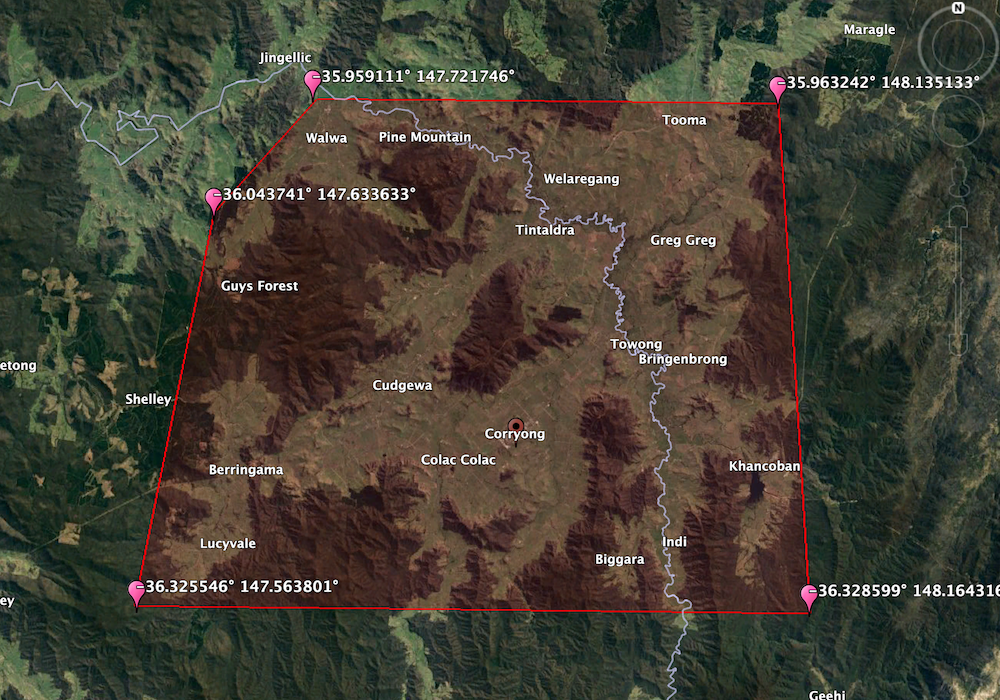
Up to 120 paraglider pilots will be seeking to launch from Mt. Elliot (near Corryong, Vic) and fly in Class G airspace up to 8500 ft Above Mean Sea Level (AMSL). An exemption is being sought from CASA to permit pilots to fly without airband VHF radios. Instead, a ground-based VHF radio operator will communicate with other airspace users and relay information via UHF radio to the pilots.
Purpose
This consultation concerns the establishment of a TDA in support of the Corryong Interclub Paragliding Fly-In 2024. This event will run over Easter, 29 March - 2 April 2024.
The purpose of the event is to develop safe flying skills in low to moderate airtime pilots and can include up to 120 participants. The participants come mainly from Victoria, NSW and the ACT. Pilots are seeking to launch from Mt. Elliot and climb in thermals in Class G airspace to 8,500 ft AMSL. Many may be attempting their first cross-country flight operations with the guidance of senior pilots in attendance. An exemption being is sought from from CASA from the carriage and use of airband VHF radios to enable pilots with, or without a SAFA VHF Endorsement or equivalent, to participate safely in this event whilst developing cross country flying skills. Use of VHF radio by all participating pilots poses challenges:
1. Low airtime pilots need to focus on their navigation and aviation while developing their cross-country flying skills. VHF usage adds additional complexity and may detract from their safe navigation and aviation while learning.
2. If sixty pilots in the same vicinity operate VHF radios in accordance with regulation it would lead to frequency congestion.
3. Pilots will carry and use an Ultra High Frequency (UHF) radio for communication with organisers, teams and retrieve drivers. Using both a UHF and VHF radio is complex when flying a paraglider and may detract from their navigation and aviation.
The experienced and qualified event safety team will operate VHF airband radios both in the air and on the ground. This will include the event director and safety director operating from the ground and at least two experienced pilots from the air. All relevant broadcasts received by the ground crew will be relayed to all participants via the event UHF channel.